PARNAGIAN ARCHITECTS
CONTENTS
- The Salt Box
-
Somers Point Paddle Club
-
Trimmer Road
-
Gap House
- Two Hill
- Red House
-
Brigantine Paddle Club
-
River Retreat
-
Marin Hill
- High Bar Pavilion
- Ranch Reno
-
Lake House
-
Beach Roost
// About Us
// Press
// News
// Inquiries
// Opportunities
We are an award-winning modern architecture practice based in New Jersey. Recognized for unique, high-quality design, we provide architectural, planning, interior design and construction management services across a range of project types.
︎ ︎ ︎

32 Monmouth Street, Floor 3
Red Bank, New Jersey 07701
The Salt Box






A modern oasis on the Barnegat Bay.
Location:
Mantoloking, New Jersey
Awards:
Press:
Mantoloking, New Jersey
Awards:
-
2021 Architizer A+ Awards, Jury Winner
- 2018 AIA-NJ Chapter Design Competition, Honor Award
Press:
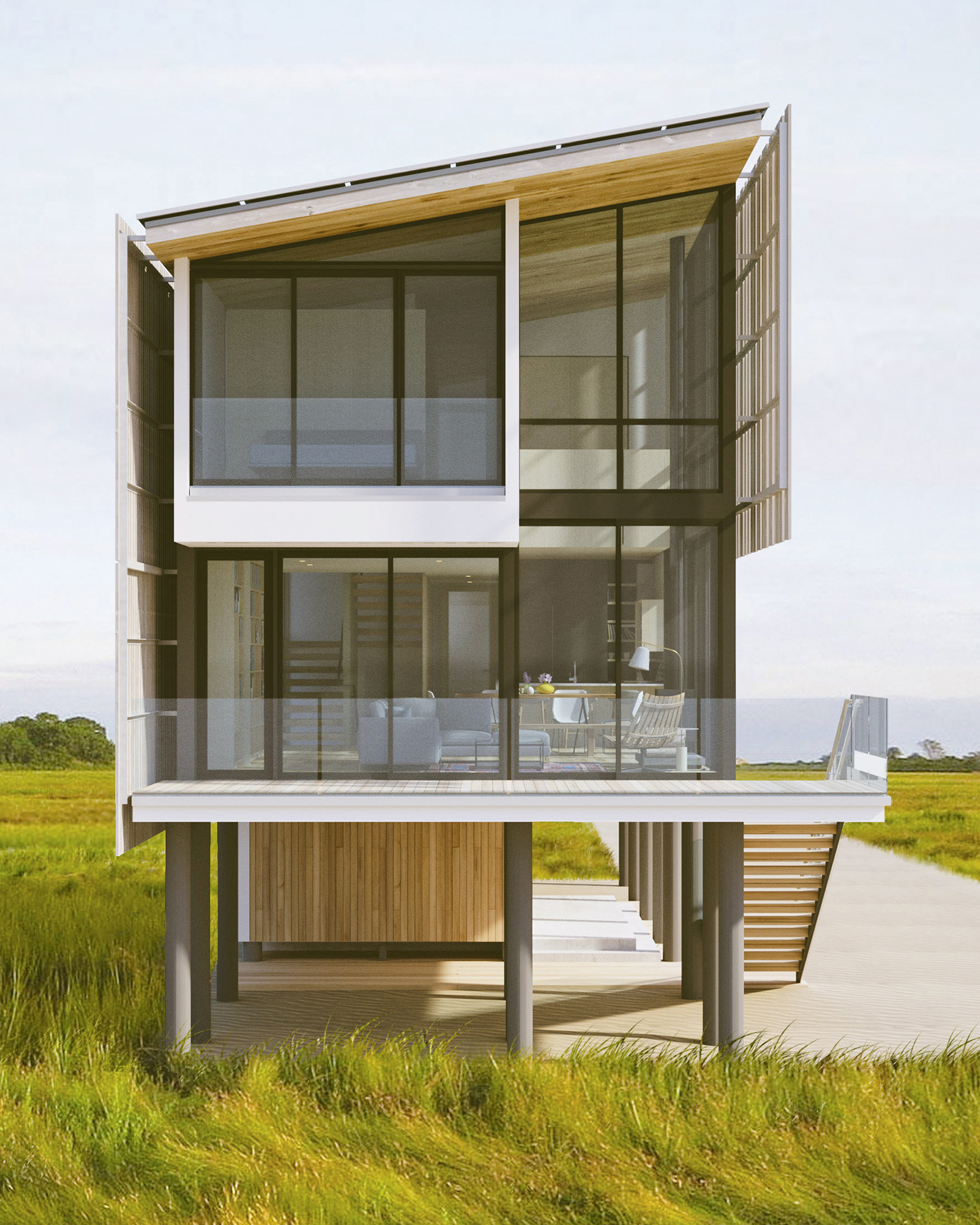
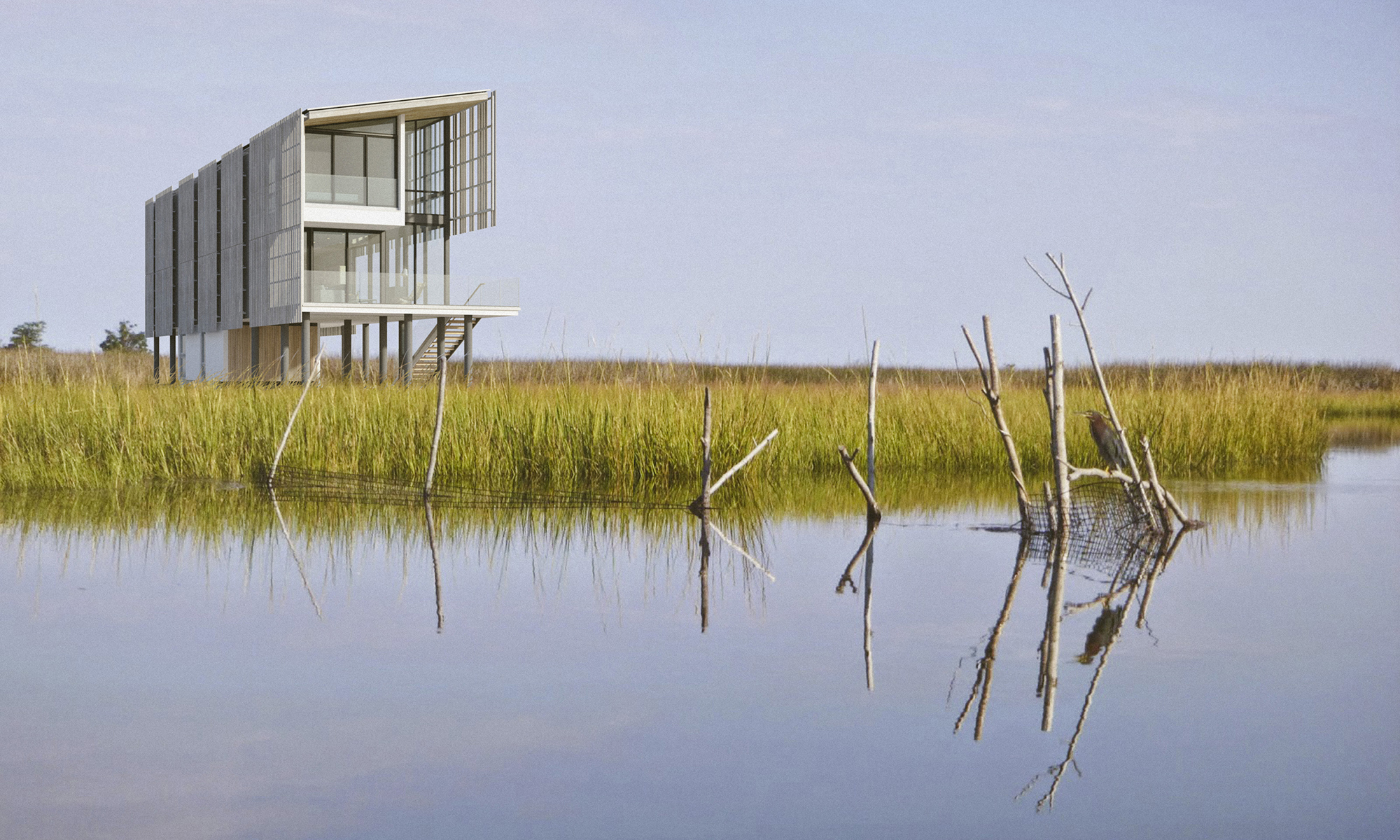
A 2,400 square foot home sited in the low lying, flood prone salt marshes of New Jersey’s Barnegat Bay. The client’s brief was to design a lasting replacement for a multi-generational family home that had been damaged beyond repair during Hurricane Sandy. The site is situated at the end of a small peninsula, bound directly to the west by a commercial shipyard and marina, and to the north, south and east by expansive views of the Barnegat Bay.
Constrained by local ordinance to the existing footprint of the previous home, Salt Box takes on a narrow, rectilinear form. Slight internal shifts in plan and volume create spaces for both retreat and gathering. A patterned rain screen composed of alternating width Atlantic White Cedar boards cloaks the exterior. The cedar weathers to a natural grey, a subtle design move to give it the appearance of having always been there.
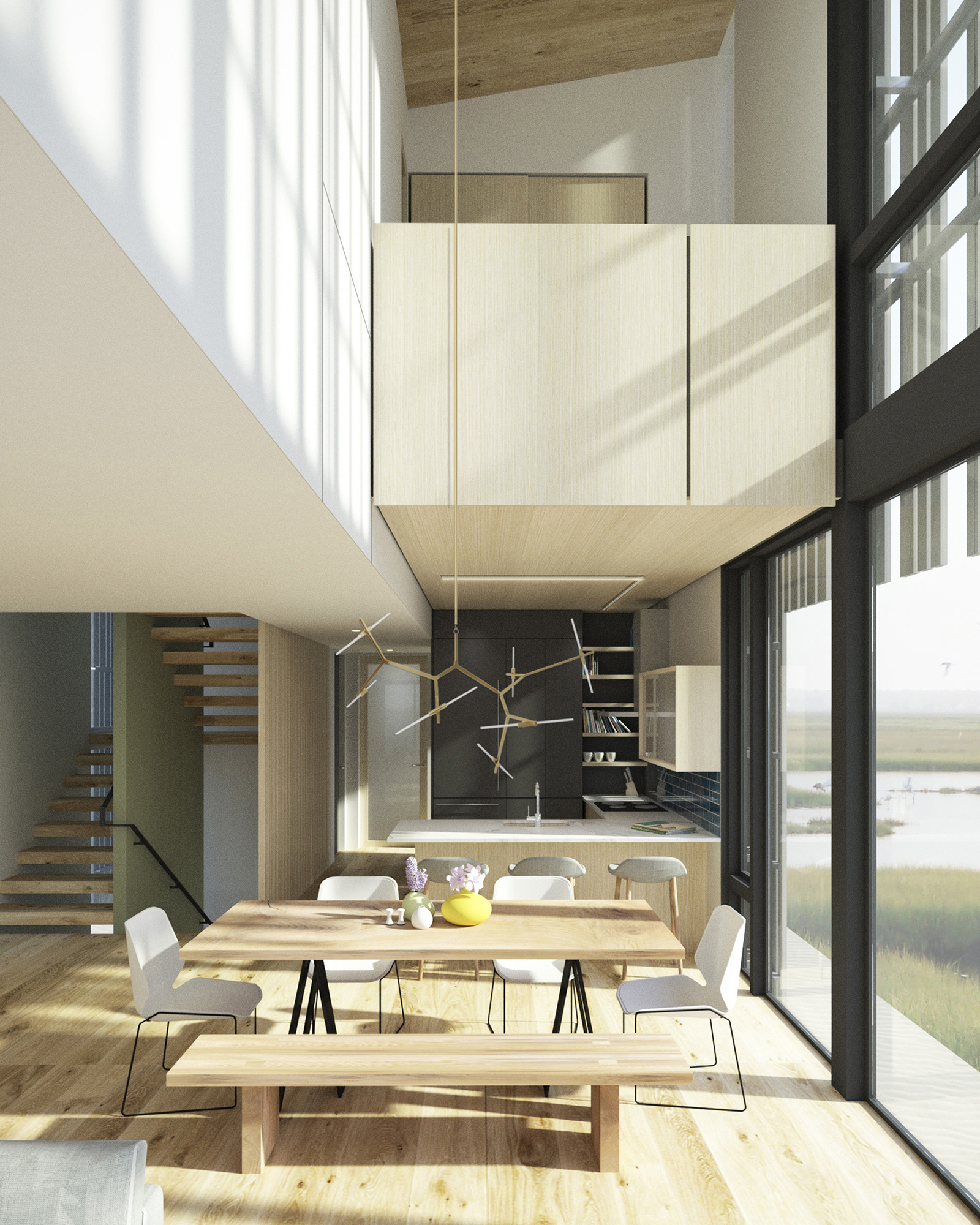
An open living, dining and kitchen area is considered as an "outdoor room" with a double height volume and floor-to-ceiling glass, inviting inhabitants into the landscape. A small study perched above from the second floor looks out into the space below and views beyond. Variations in the porosity of the rain screen create a lively play of interior light and shadow throughout the day while mitigating solar heat gain across the entire building envelope. The "outdoor room" serves as a shady refuge within the vast salt marsh landscape. A free-standing wood burning fireplace sits prominently within the space. The exterior cedar soffit permeates through to the interior forming a continuous ceiling lining. White Oak flooring and joinery and white painted cement board and plasterboard compose the majority of the interior material palette. An array of photo-voltaic panels at the roof level provides electricity for the home, taking advantage of the gently sloping planar roof surface and abundant southwesterly sun exposure.
Constrained by local ordinance to the existing footprint of the previous home, Salt Box takes on a narrow, rectilinear form. Slight internal shifts in plan and volume create spaces for both retreat and gathering. A patterned rain screen composed of alternating width Atlantic White Cedar boards cloaks the exterior. The cedar weathers to a natural grey, a subtle design move to give it the appearance of having always been there.
An open living, dining and kitchen area is considered as an "outdoor room" with a double height volume and floor-to-ceiling glass, inviting inhabitants into the landscape. A small study perched above from the second floor looks out into the space below and views beyond. Variations in the porosity of the rain screen create a lively play of interior light and shadow throughout the day while mitigating solar heat gain across the entire building envelope. The "outdoor room" serves as a shady refuge within the vast salt marsh landscape. A free-standing wood burning fireplace sits prominently within the space. The exterior cedar soffit permeates through to the interior forming a continuous ceiling lining. White Oak flooring and joinery and white painted cement board and plasterboard compose the majority of the interior material palette. An array of photo-voltaic panels at the roof level provides electricity for the home, taking advantage of the gently sloping planar roof surface and abundant southwesterly sun exposure.
Somers Point Paddle Club


A contemporary waterfront private pool club rooted in the maritime architecture and coastal heritage of Somers Point.
Location:
Somers Point, New Jersey
Status:
Completed, 2026
Developer:
Scarborough Properties
Builder:
Massett Building Company
Photography:
Halkin Mason Photography
Somers Point, New Jersey
Status:
Completed, 2026
Developer:
Scarborough Properties
Builder:
Massett Building Company
Photography:
Halkin Mason Photography
The Somers Point Paddle Club transforms a cleared waterfront site into a gathering place organized around recreation, hospitality, and connection to the water. The principal challenge was to accommodate an intensive program while maintaining human scale and architectural clarity on a site shaped by the Bay Front Historic District, coastal regulation, flood requirements, and public waterfront access.
Rather than concentrate the program into a single mass, the project is conceived as a cloister of gabled volumes organized around an elevated pool deck. The strategy draws from Somers Point's maritime history, where boatyards and boathouses formed clusters of simple utilitarian structures. Early studies explored buildings of varying size, height, and orientation, with the spaces between them treated as active architectural "voids." This allows a substantial contemporary program to be experienced as a collection of intimate spaces rather than a singular large building.
Flood requirements became a generator of the architecture. FEMA required the principal occupied level and utilities to be elevated approximately seven feet above grade. Rather than treating this elevation as a technical necessity, the project transforms it into a continuous inhabited platform connecting pools, terraces, lounges, dining, and covered exterior spaces. Flush thresholds maintain accessible circulation throughout, while both the elevated restaurant pavilion and the surrounding pool deck gain expansive views across the adjacent marina and above the boats docked below.
Arrival reinforces this transition. Ipe-clad stairs and ramps extend the material language of the marina upward to an entry "boardwalk," where they transition to porcelain paving within the club. The main pool is aligned with the primary entry, drawing visitors through the covered entrance hall toward water and sky.
A restrained coastal material palette further connects the project to its setting. Cedar shakes wrap the primary gabled volumes; dark horizontal fiber cement siding and stone form a quiet base; and vertical cedar screens define guardrails and rainscreen surfaces, subtly recalling the dune fencing characteristic of the region's beaches. Lower cabanas and pergolas extend this language around the pool deck, creating shade and more intimate places of retreat.
Throughout the day, sunlight reflected from the pools moves across the ceilings and soffits of the restaurant, bar, and cabanas, extending the presence of water into the architecture itself. The result is a contemporary maritime village in which resilience, accessibility, materiality, historic context, and waterfront experience are integrated into a single architectural environment.
Rather than concentrate the program into a single mass, the project is conceived as a cloister of gabled volumes organized around an elevated pool deck. The strategy draws from Somers Point's maritime history, where boatyards and boathouses formed clusters of simple utilitarian structures. Early studies explored buildings of varying size, height, and orientation, with the spaces between them treated as active architectural "voids." This allows a substantial contemporary program to be experienced as a collection of intimate spaces rather than a singular large building.
Flood requirements became a generator of the architecture. FEMA required the principal occupied level and utilities to be elevated approximately seven feet above grade. Rather than treating this elevation as a technical necessity, the project transforms it into a continuous inhabited platform connecting pools, terraces, lounges, dining, and covered exterior spaces. Flush thresholds maintain accessible circulation throughout, while both the elevated restaurant pavilion and the surrounding pool deck gain expansive views across the adjacent marina and above the boats docked below.
Arrival reinforces this transition. Ipe-clad stairs and ramps extend the material language of the marina upward to an entry "boardwalk," where they transition to porcelain paving within the club. The main pool is aligned with the primary entry, drawing visitors through the covered entrance hall toward water and sky.
A restrained coastal material palette further connects the project to its setting. Cedar shakes wrap the primary gabled volumes; dark horizontal fiber cement siding and stone form a quiet base; and vertical cedar screens define guardrails and rainscreen surfaces, subtly recalling the dune fencing characteristic of the region's beaches. Lower cabanas and pergolas extend this language around the pool deck, creating shade and more intimate places of retreat.
Throughout the day, sunlight reflected from the pools moves across the ceilings and soffits of the restaurant, bar, and cabanas, extending the presence of water into the architecture itself. The result is a contemporary maritime village in which resilience, accessibility, materiality, historic context, and waterfront experience are integrated into a single architectural environment.
Trimmer Road


A modern addition to a renovated 1910 log cabin.
Location:
Califon, New Jersey
Califon, New Jersey
How does one enlarge a small, century-old log cabin without diminishing the character that makes it worth preserving?
The project responds by resisting imitation. Rather than extending the language of the existing structure through a contemporary approximation of rustic architecture, the addition is conceived as an independent architectural volume. Its distinction allows the original cabin to remain recognizable as a complete object while establishing a deliberate dialogue between architectures separated by more than a century.
That relationship is developed through material, landscape, and spatial organization rather than formal replication. Natural stone emerges from the sloping terrain, recalling the exposed foundations of the cabin and grounding the addition to the site. Above, charred cypress is detailed as an open-joint horizontal rainscreen, its modulated joints subtly recalling the chinking between the cabin's logs. At the corners, tightly woven boards reinterpret the interlocking character of traditional log construction without reproducing it. Expanses of glass establish a distinctly different relationship to the wooded setting, opening the new living spaces to daylight, gardens, and changing seasons.
The addition's offset placement is equally consequential. Instead of continuing the cabin's footprint, the new volume shifts laterally, touching the original structure at a relatively narrow connection. The resulting space around and between the buildings becomes part of the architecture: a new entry court establishes arrival, while a private rear court joins the expanded kitchen and dining spaces with the cabin's living room, existing stone patio, and gardens.
At their intersection, circulation becomes the hinge. A shallow passage establishes an axial view toward a new open stair, creating a moment of orientation and transition between the structures. The stair rises within the contemporary volume toward the private primary suite above, while daylight penetrates deep into the connection.
The project treats expansion not as an exercise in stylistic continuity, but as an opportunity to clarify what already exists. The cabin retains its modest scale, material presence, and identity; the addition assumes the requirements of contemporary domestic life. Their continuity is found not in resemblance, but through material correspondences, shared landscape, and the deliberately formed spaces between them.
The project responds by resisting imitation. Rather than extending the language of the existing structure through a contemporary approximation of rustic architecture, the addition is conceived as an independent architectural volume. Its distinction allows the original cabin to remain recognizable as a complete object while establishing a deliberate dialogue between architectures separated by more than a century.
That relationship is developed through material, landscape, and spatial organization rather than formal replication. Natural stone emerges from the sloping terrain, recalling the exposed foundations of the cabin and grounding the addition to the site. Above, charred cypress is detailed as an open-joint horizontal rainscreen, its modulated joints subtly recalling the chinking between the cabin's logs. At the corners, tightly woven boards reinterpret the interlocking character of traditional log construction without reproducing it. Expanses of glass establish a distinctly different relationship to the wooded setting, opening the new living spaces to daylight, gardens, and changing seasons.
The addition's offset placement is equally consequential. Instead of continuing the cabin's footprint, the new volume shifts laterally, touching the original structure at a relatively narrow connection. The resulting space around and between the buildings becomes part of the architecture: a new entry court establishes arrival, while a private rear court joins the expanded kitchen and dining spaces with the cabin's living room, existing stone patio, and gardens.
At their intersection, circulation becomes the hinge. A shallow passage establishes an axial view toward a new open stair, creating a moment of orientation and transition between the structures. The stair rises within the contemporary volume toward the private primary suite above, while daylight penetrates deep into the connection.
The project treats expansion not as an exercise in stylistic continuity, but as an opportunity to clarify what already exists. The cabin retains its modest scale, material presence, and identity; the addition assumes the requirements of contemporary domestic life. Their continuity is found not in resemblance, but through material correspondences, shared landscape, and the deliberately formed spaces between them.
Gap House








A modern, cedar-clad beach house on Long Beach Island.
Location:
Harvey Cedars, Long Beach Island, NJ
Status:
Completed, 2024
Awards:
Press:
Photography:
Halkin Mason Photography
Harvey Cedars, Long Beach Island, NJ
Status:
Completed, 2024
Awards:
Press:
-
Design NJ Magazine | Feature Project, October/November 2025 Issue
- Archinect | Feature Project, June, 2024
Photography:
Halkin Mason Photography
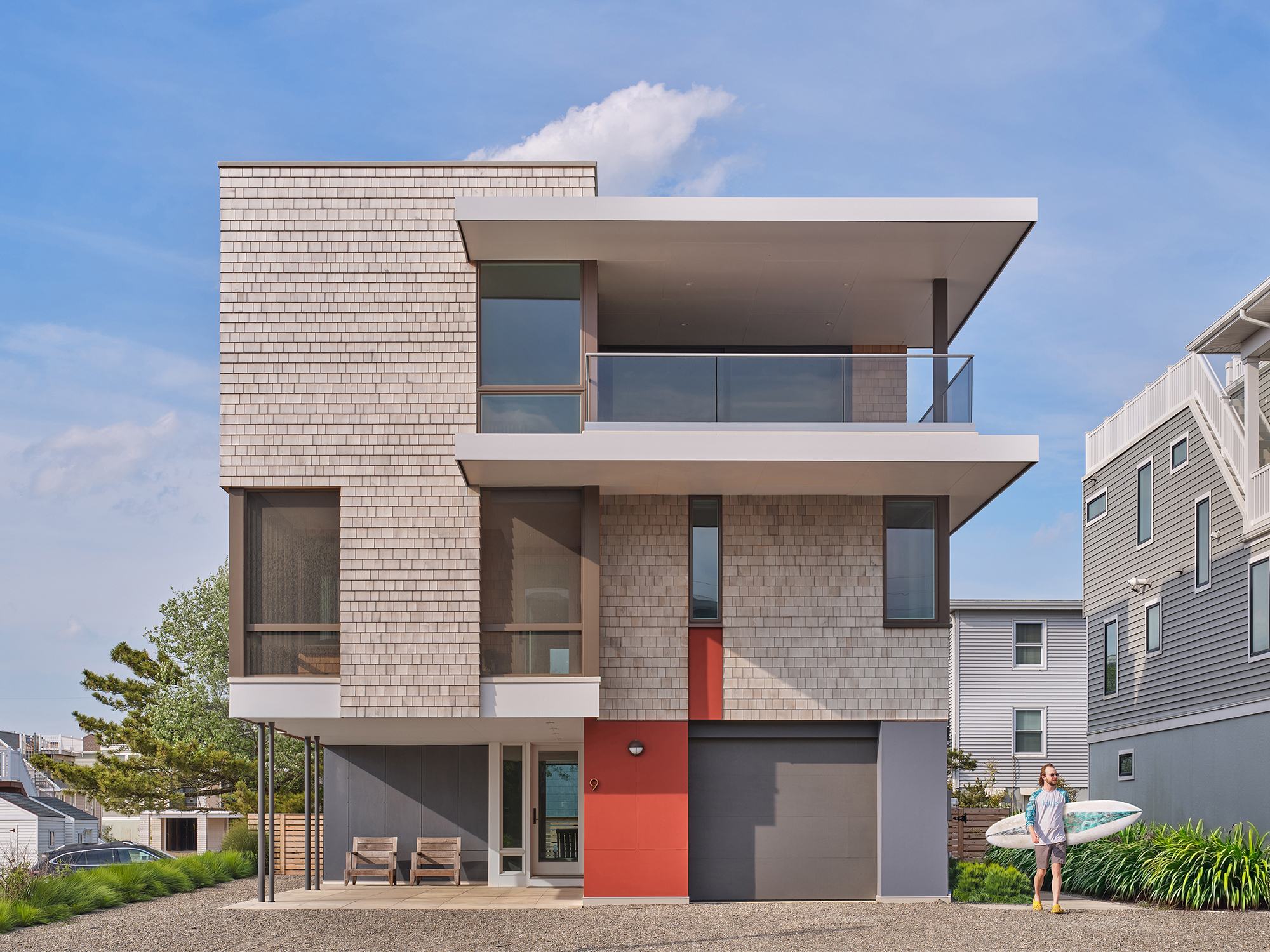
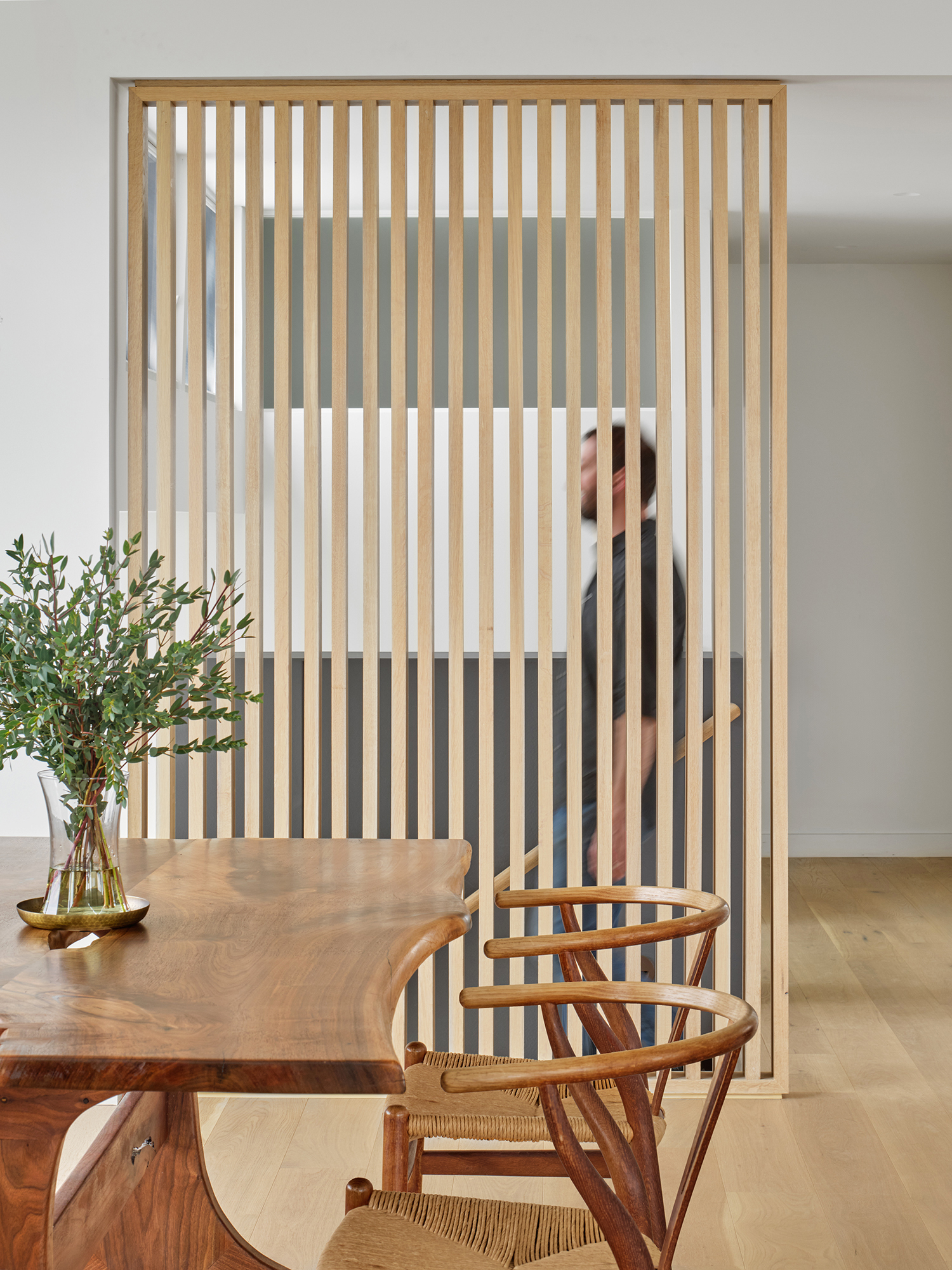
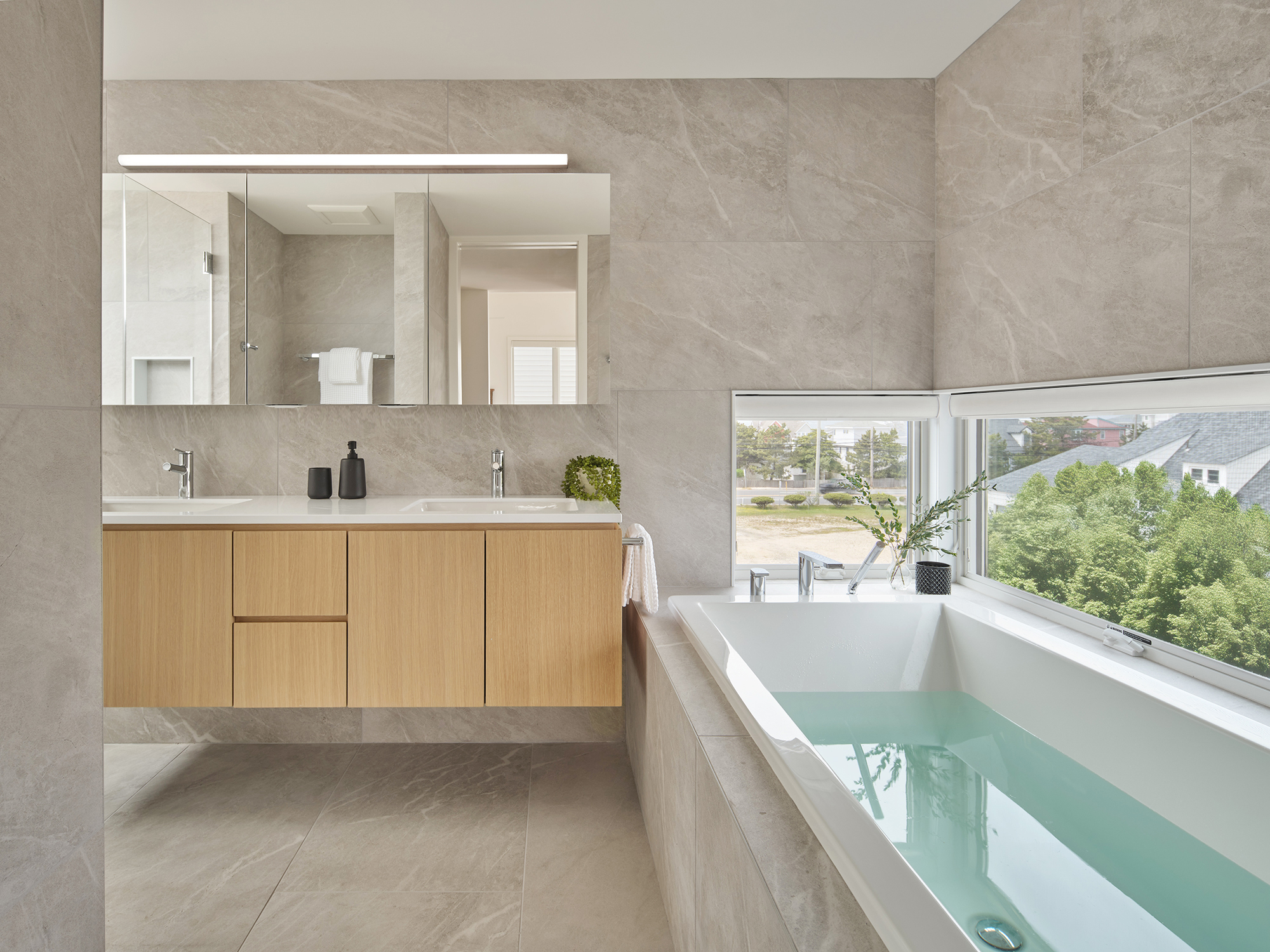
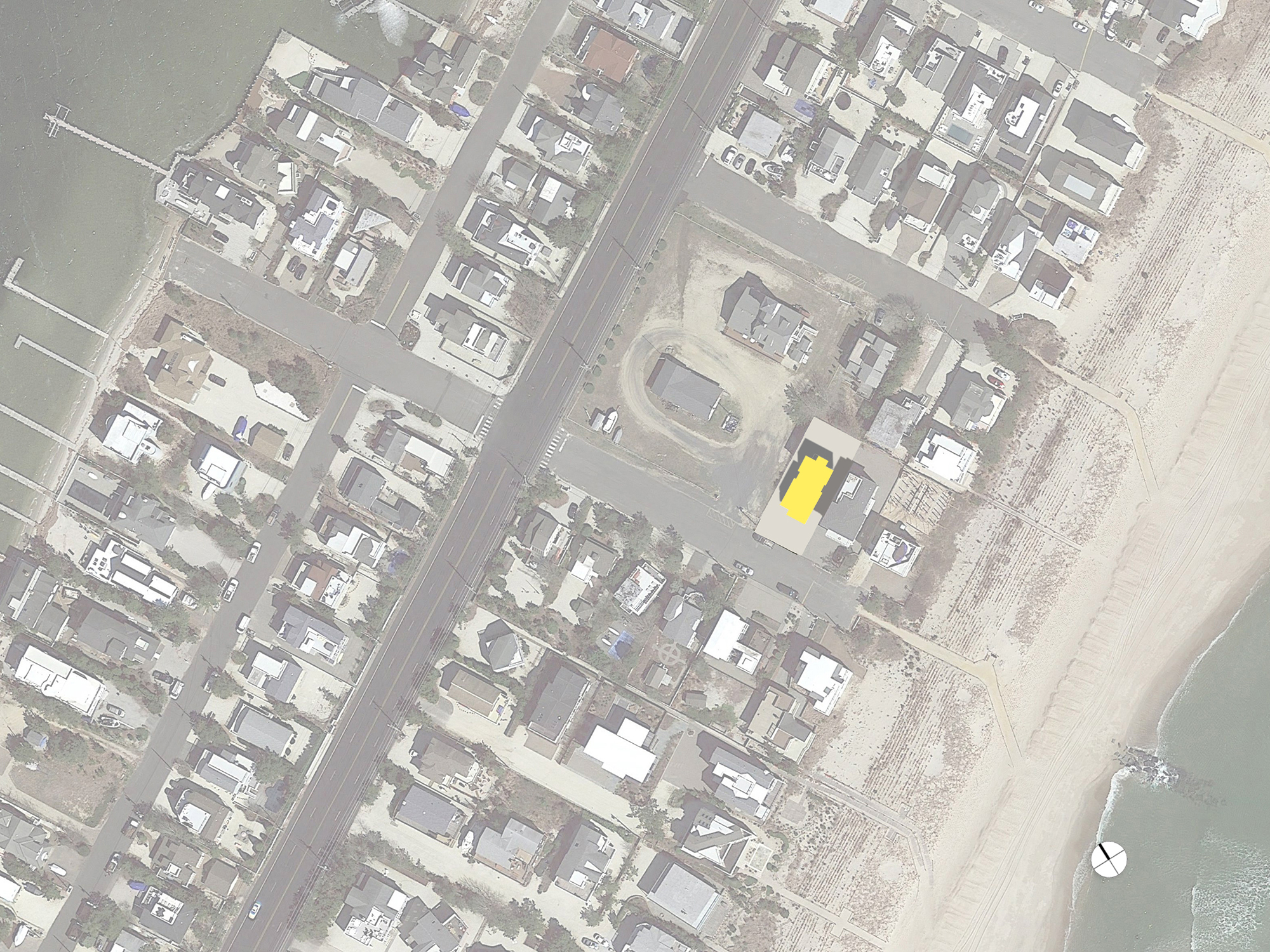
A house for a couple and their family looking to slow down on Long Beach Island. Sited on a particularly narrow stretch of the barrier island, the house takes full advantage of the lot’s unique positioning to maximize expansive views towards both the bay and the ocean.
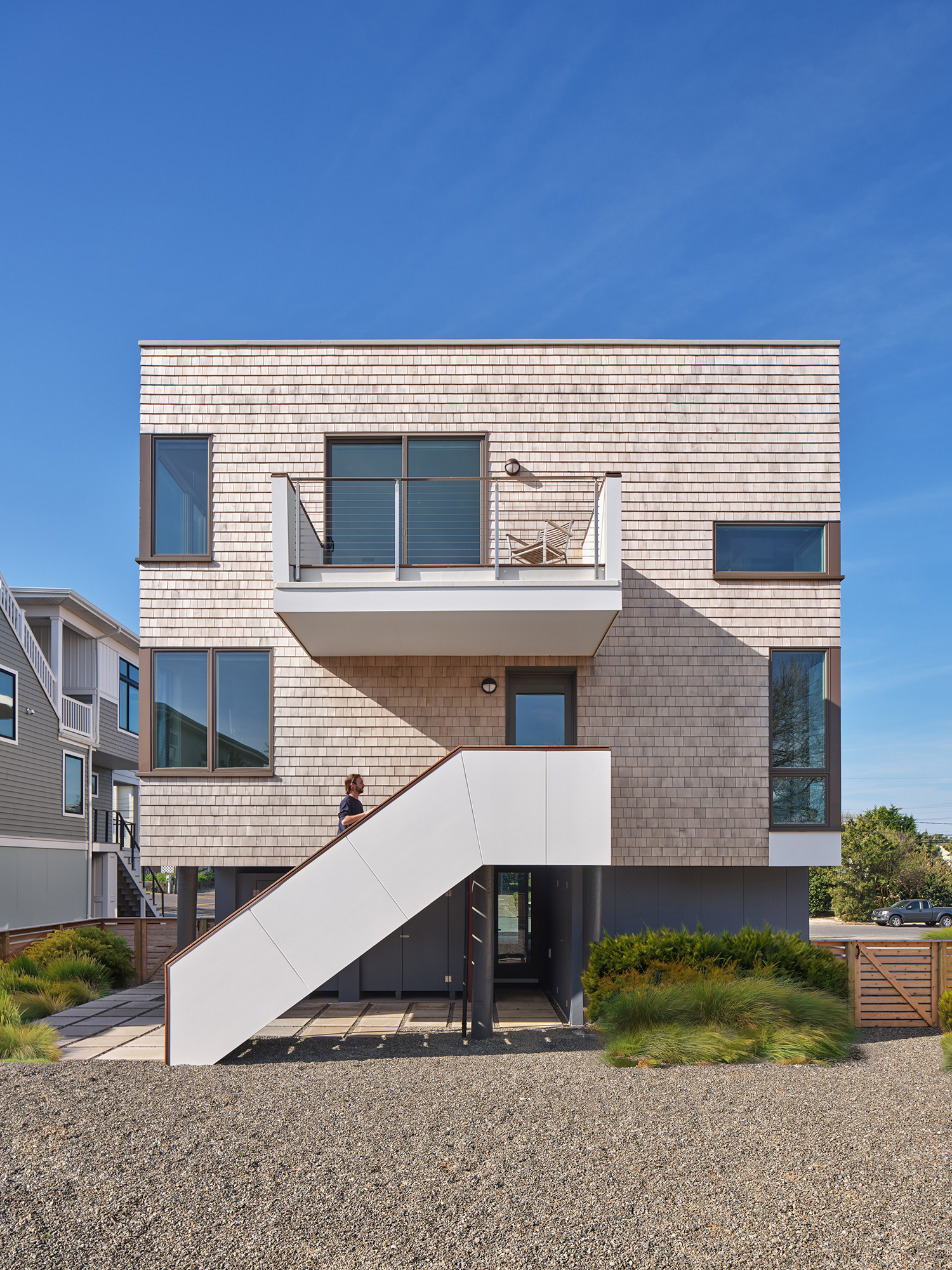
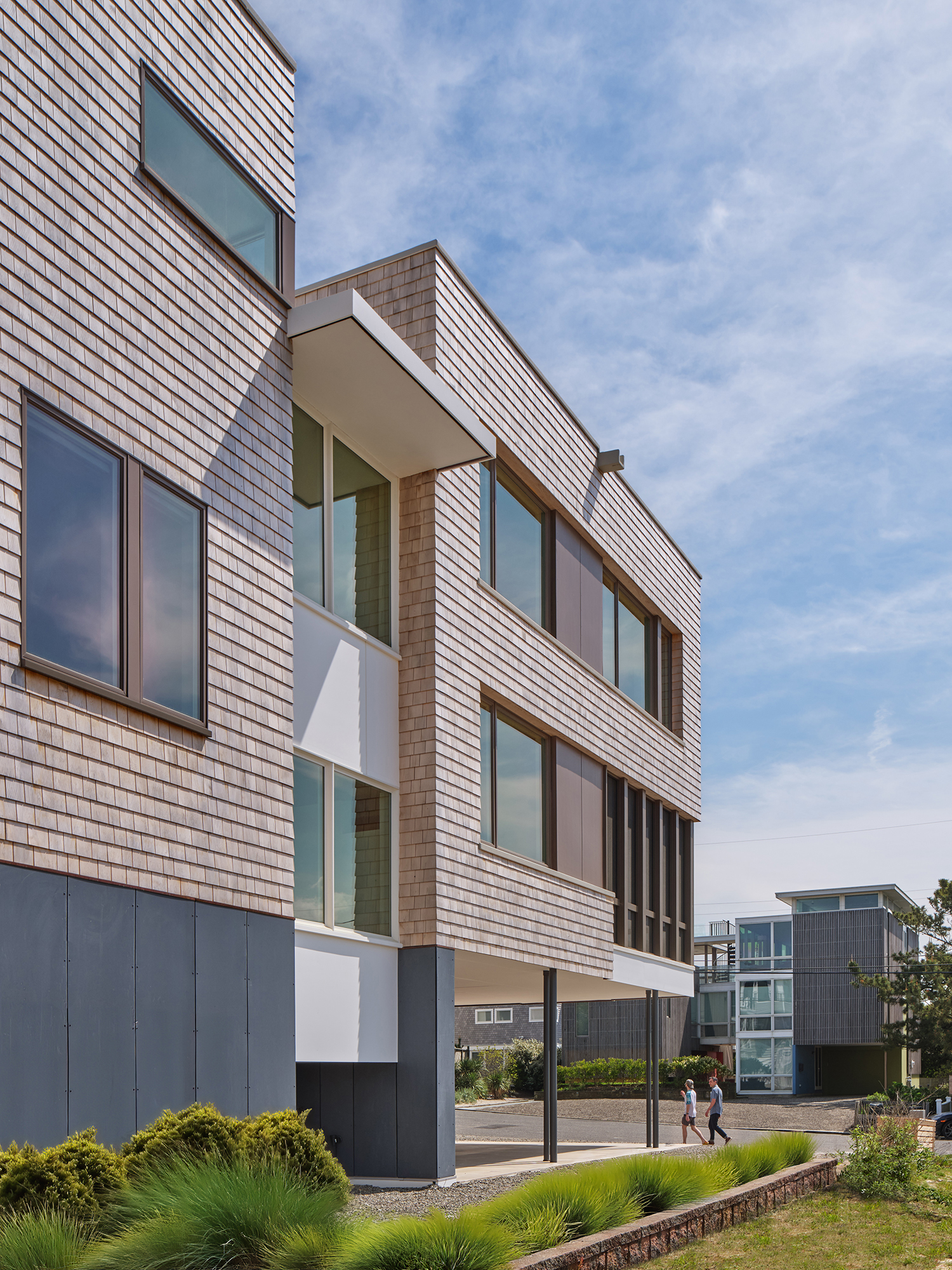
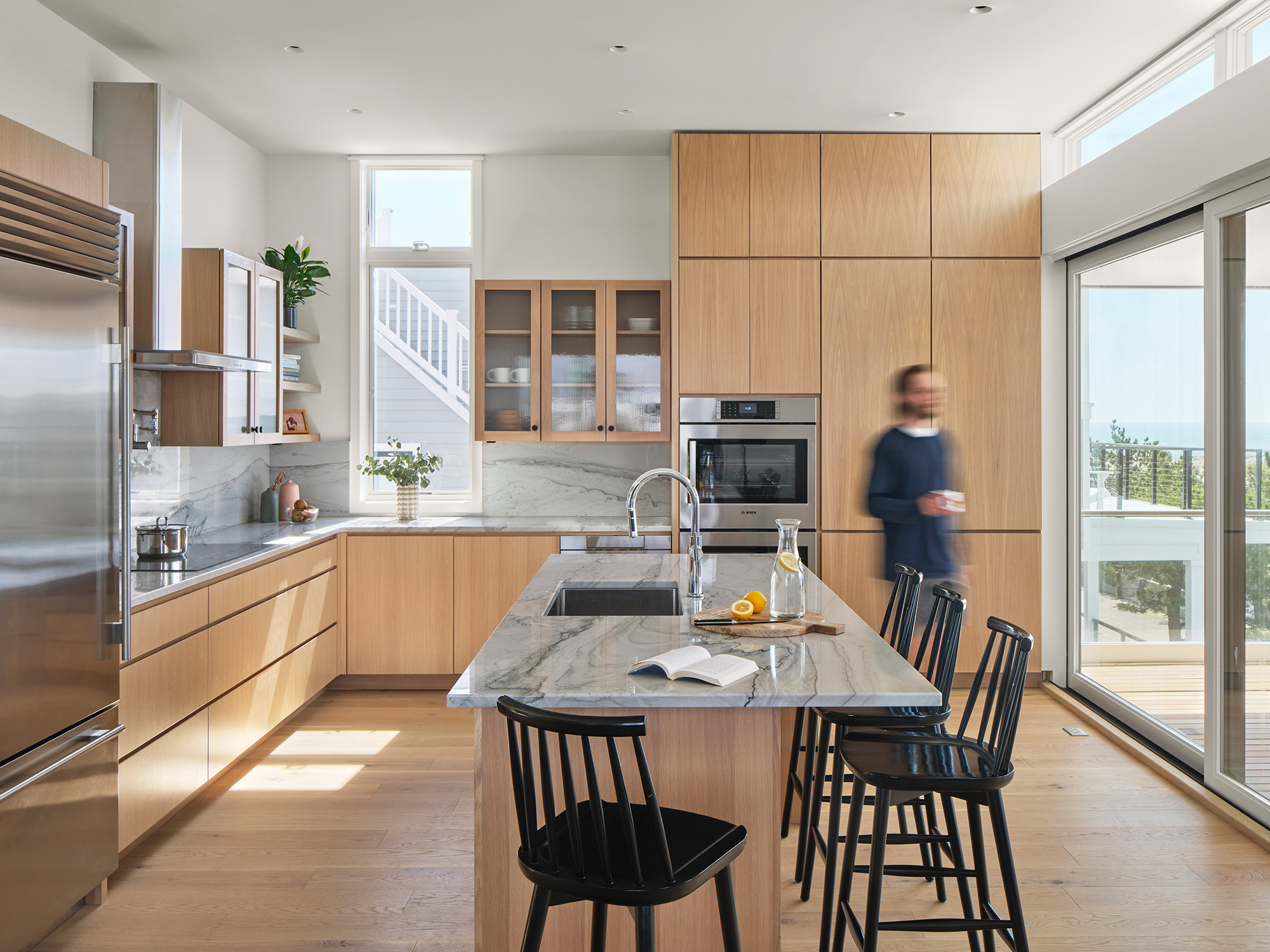
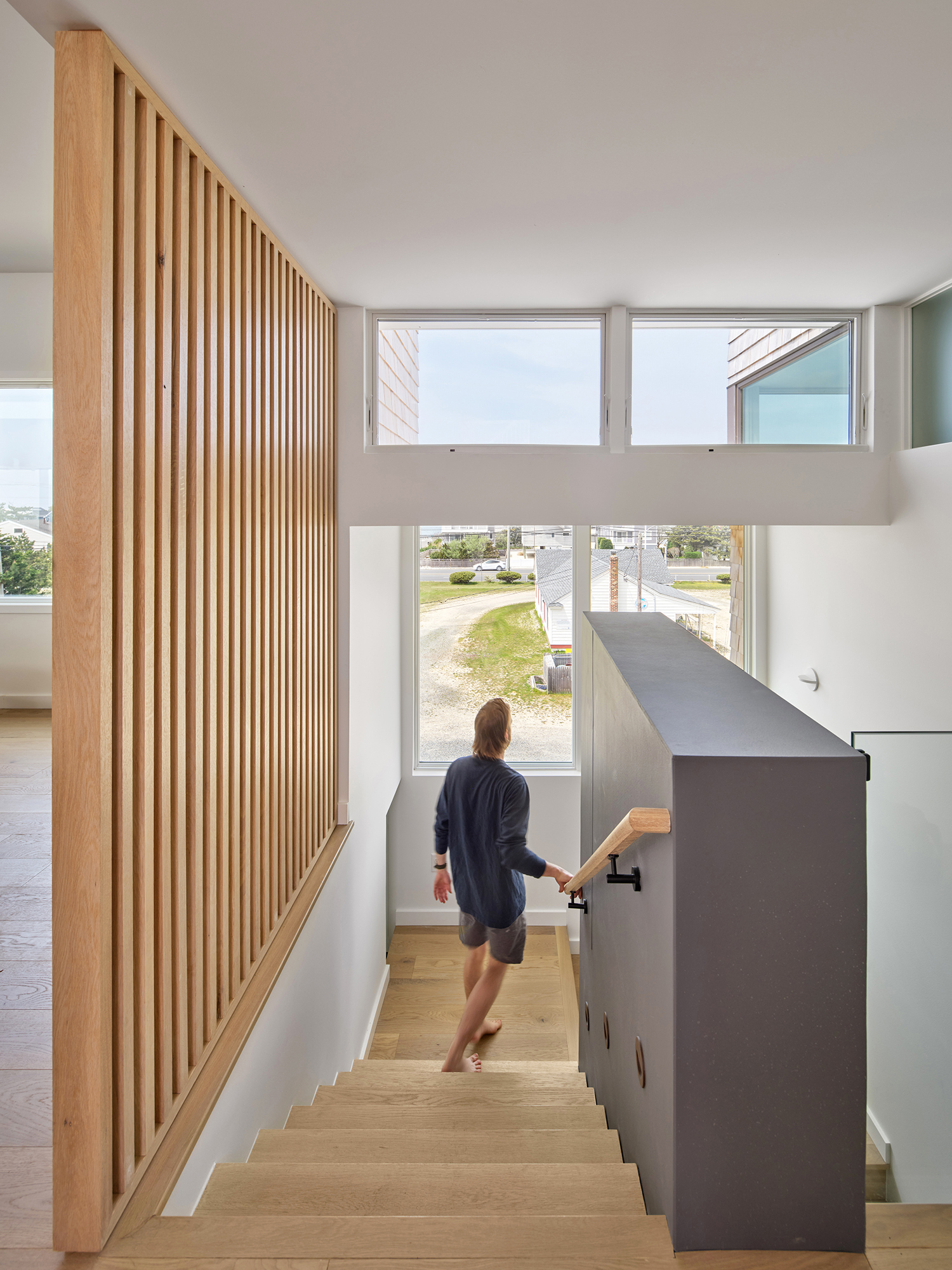
The main bedroom suite and living spaces are elevated to the uppermost floor to capture unobstructed ocean views with an abundance of glass. Large sliding glass doors open the main living space to a generously sized, ocean facing covered deck. A band of horizontal windows stretches across the west facade, connecting the ocean to the bay. The first-floor level, which is elevated to accommodate local flood zone regulations, sits just below the top of the dunes, and is predominated by views towards the bay. A western oriented screened porch is attached to a lower-level media room and lounge area. Bedrooms at this level are situated along the east side of the house, away from the early morning bustle and banter of fishermen in the parking lot of the historic fishing club, which is located directly next door. Outdoor showers and beach storage are secluded for privacy beneath the house, facing the rear yard. A rear exterior stair connected to a patio at grade leads to a secondary foyer and laundry room at the first floor, while also providing the dog easy access to the fenced-in rear yard. The main stair and elevator are centrally located, bisecting the overall mass of the building. Carefully placed windows at each landing frame views of the bay, inviting a moment of pause.
Eastern White Cedar shingles clad the elevated rectilinear volumes, weathering to a natural silver grey. Cement board panels, suggestive of natural stone, define the base of the building. Colored accent panels stretch out to engage the street front and draw users in towards the main entry at the ground floor.
Two Hill





A serene private home overlooking the Sandy Hook Bay.
Location:
Atlantic Highlands, New Jersey
Status:
Under Construction
Atlantic Highlands, New Jersey
Status:
Under Construction
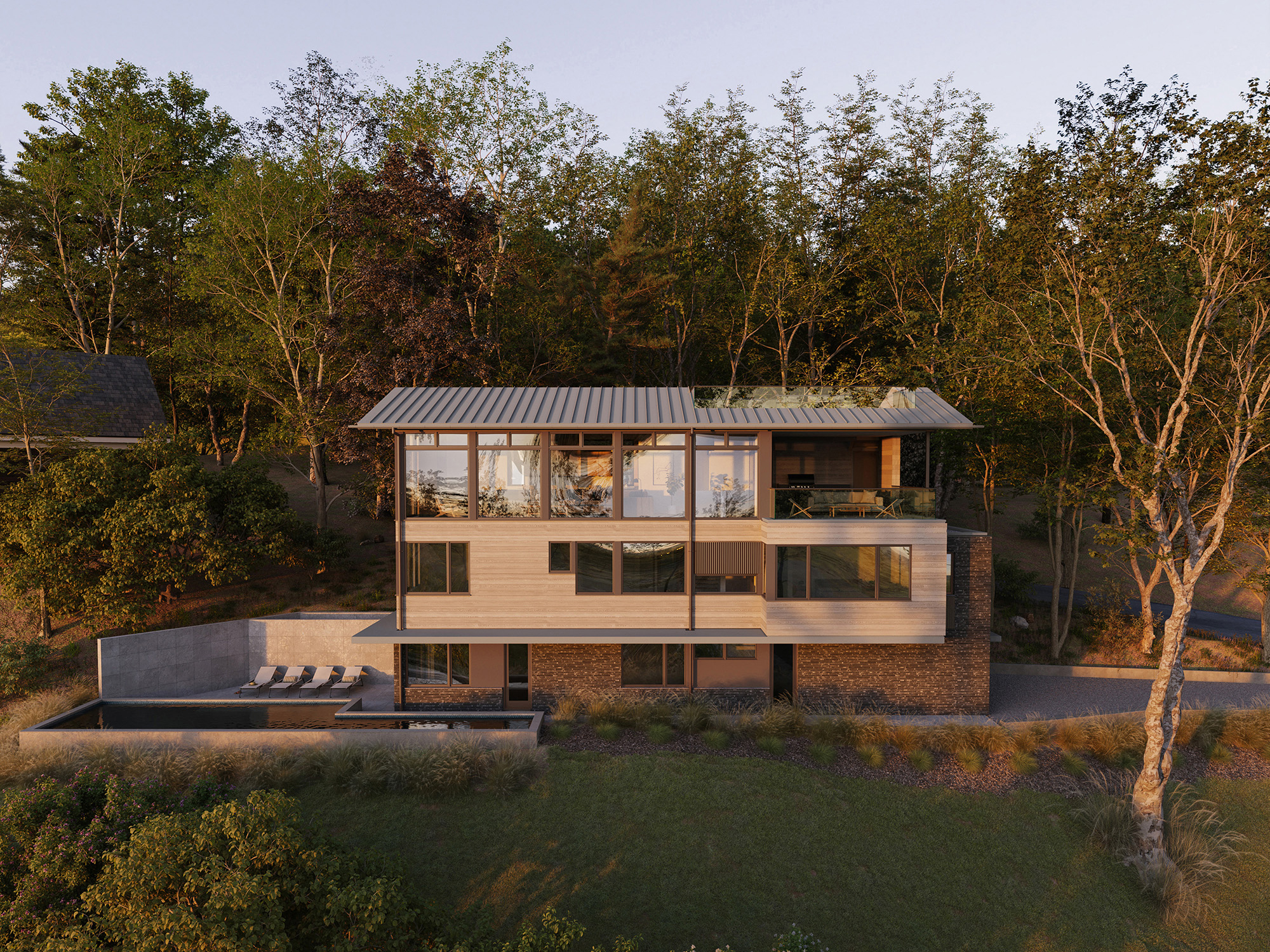
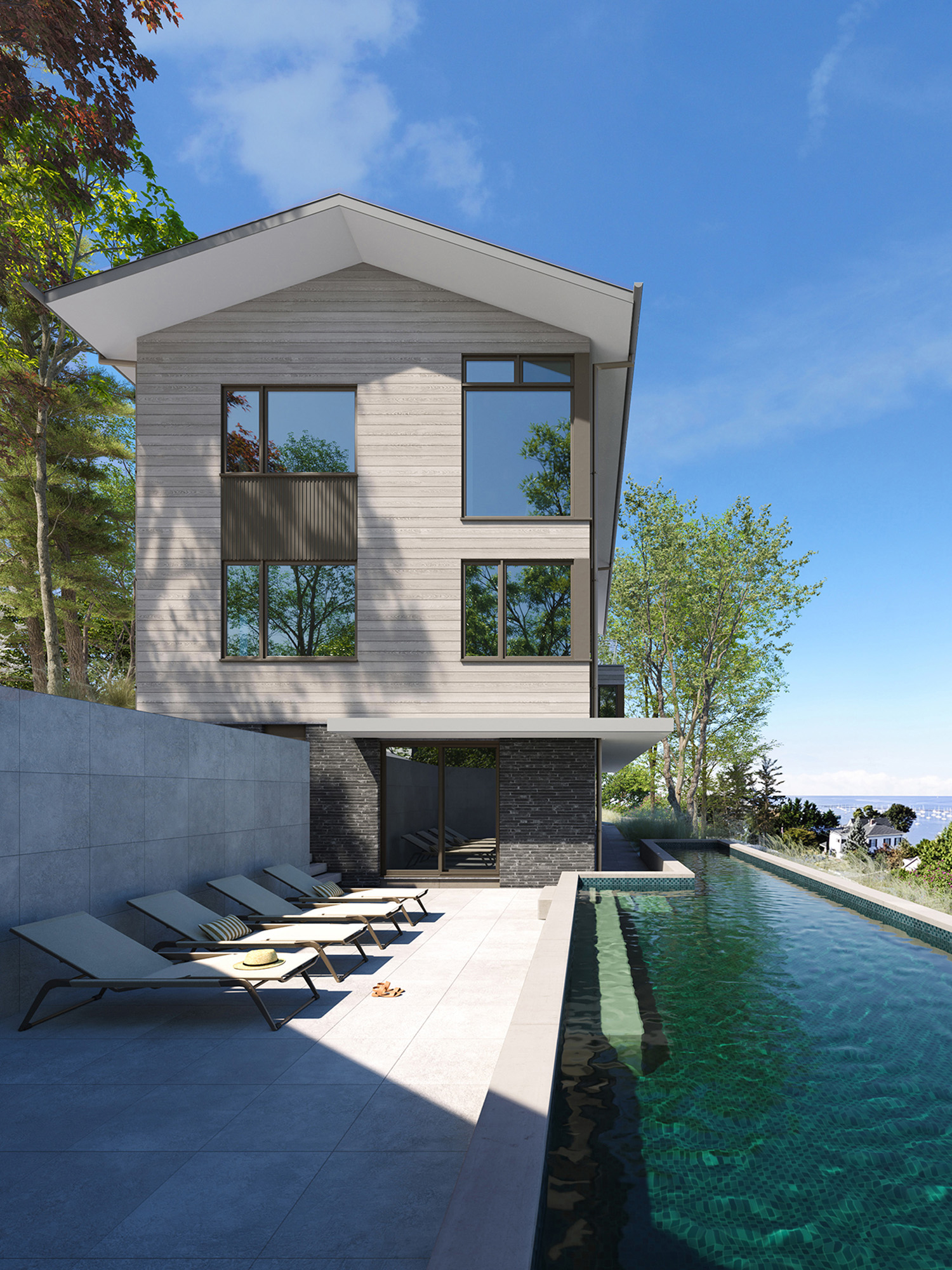
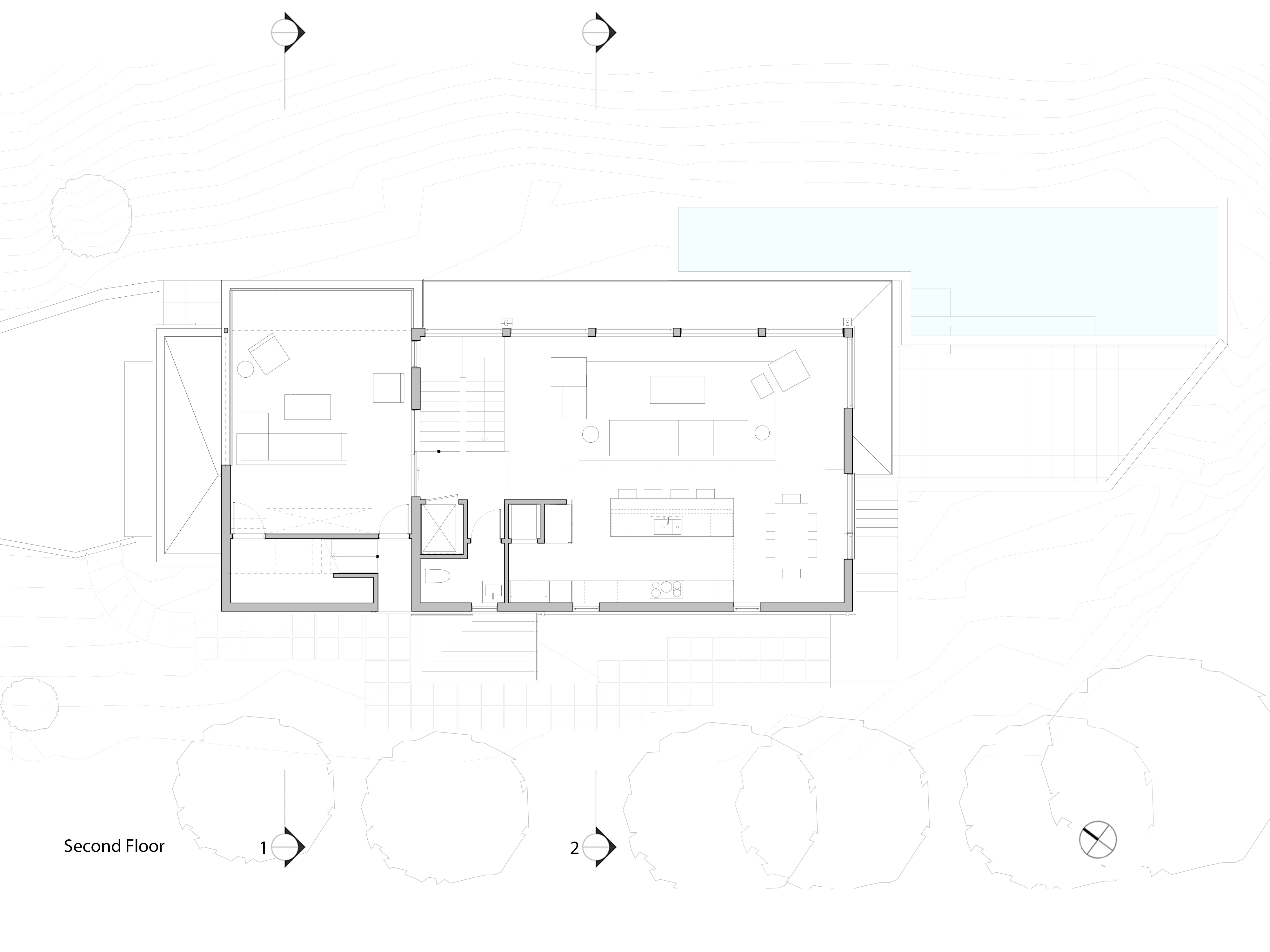
Two Hill is a 3-story private
residence sited on a steep sloping, picturesque lot with 270-degree
unobstructed views of the Sandy Hook Bay and distant NYC skyline.
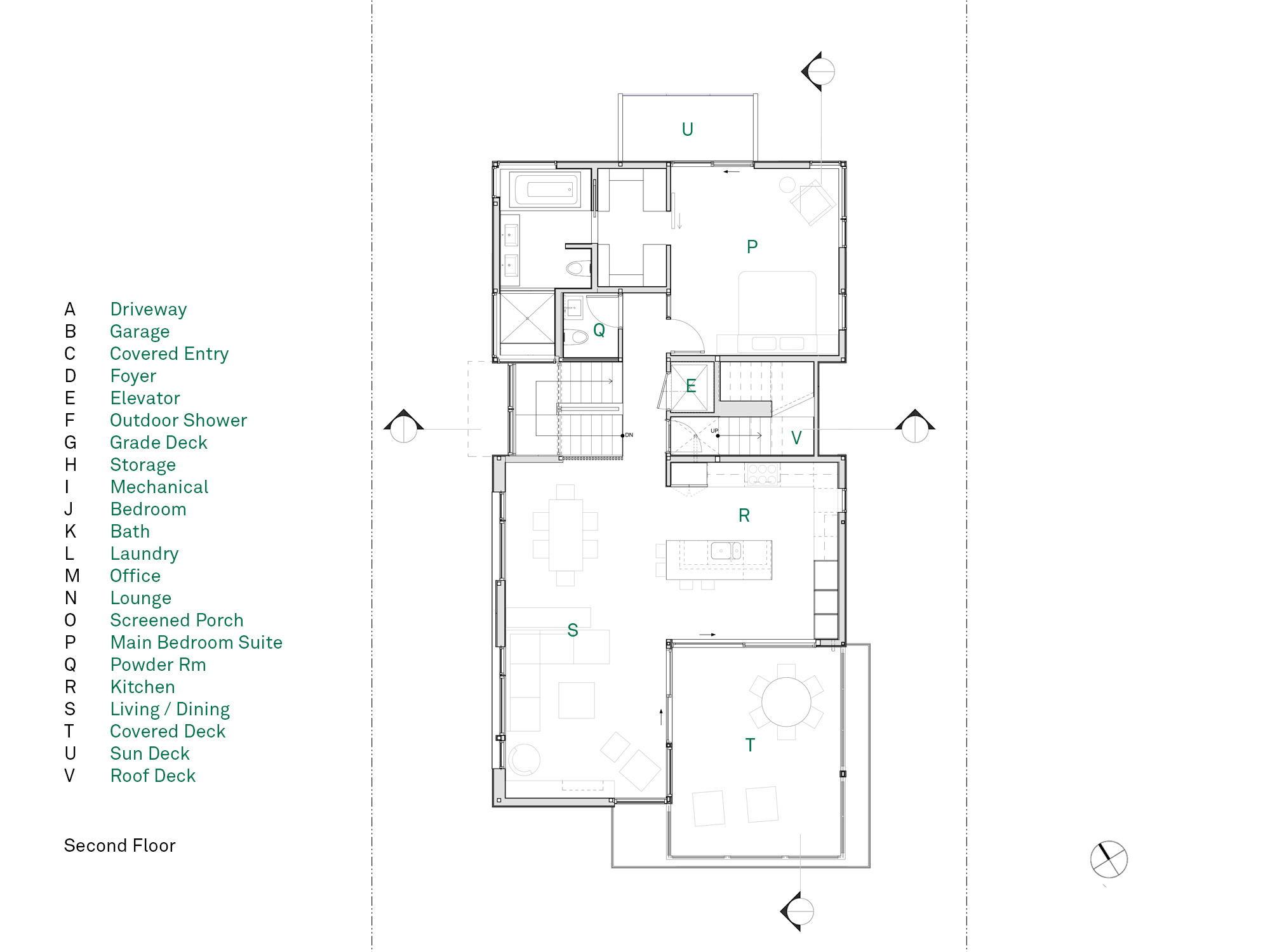
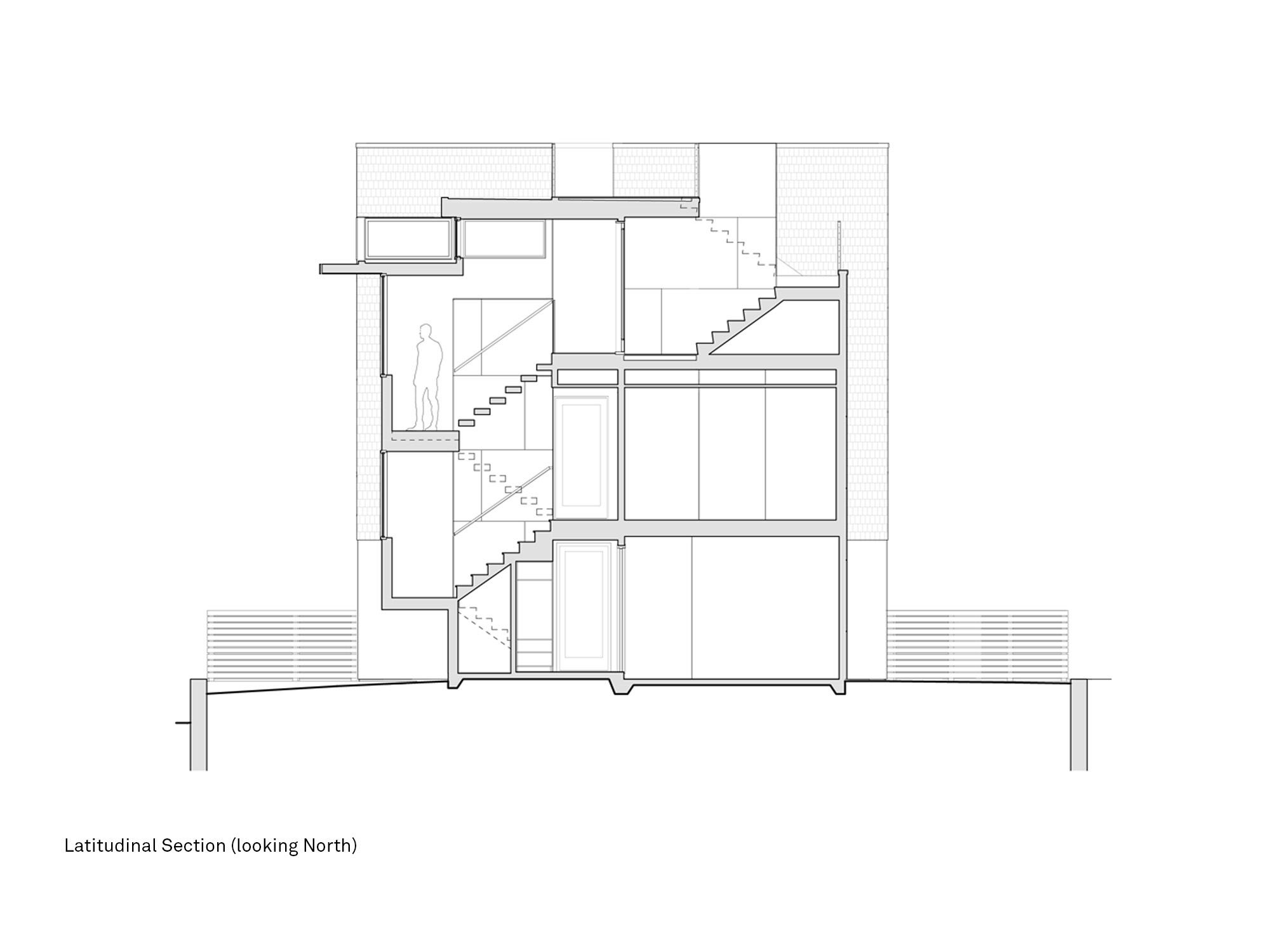
The design for the home required very careful navigation of a variety of stringent local ordinances related to the steep sloping and unstable topography across the site. As such, substantial slope stabilization measures were necessitated to make redevelopment of the site viable. To minimize the home’s footprint relative to the slope, the house is designed largely within the footprint of the previous home, a one and a half story 1950’s Sears kit house.
The main living spaces are elevated to the uppermost floor to capture unobstructed views with an abundance of glass. An open living, dining and kitchen is connected to a generously sized, covered deck with a sun-drenched roof deck above. The first floor is organized with spaces for both gathering and retreat — each room carefully situated to capture views, both grand and intimate. The ground floor is composed of an office, lounge, recreational space, and secondary entry with access to the garage.
The design for the home required very careful navigation of a variety of stringent local ordinances related to the steep sloping and unstable topography across the site. As such, substantial slope stabilization measures were necessitated to make redevelopment of the site viable. To minimize the home’s footprint relative to the slope, the house is designed largely within the footprint of the previous home, a one and a half story 1950’s Sears kit house.
The main living spaces are elevated to the uppermost floor to capture unobstructed views with an abundance of glass. An open living, dining and kitchen is connected to a generously sized, covered deck with a sun-drenched roof deck above. The first floor is organized with spaces for both gathering and retreat — each room carefully situated to capture views, both grand and intimate. The ground floor is composed of an office, lounge, recreational space, and secondary entry with access to the garage.